

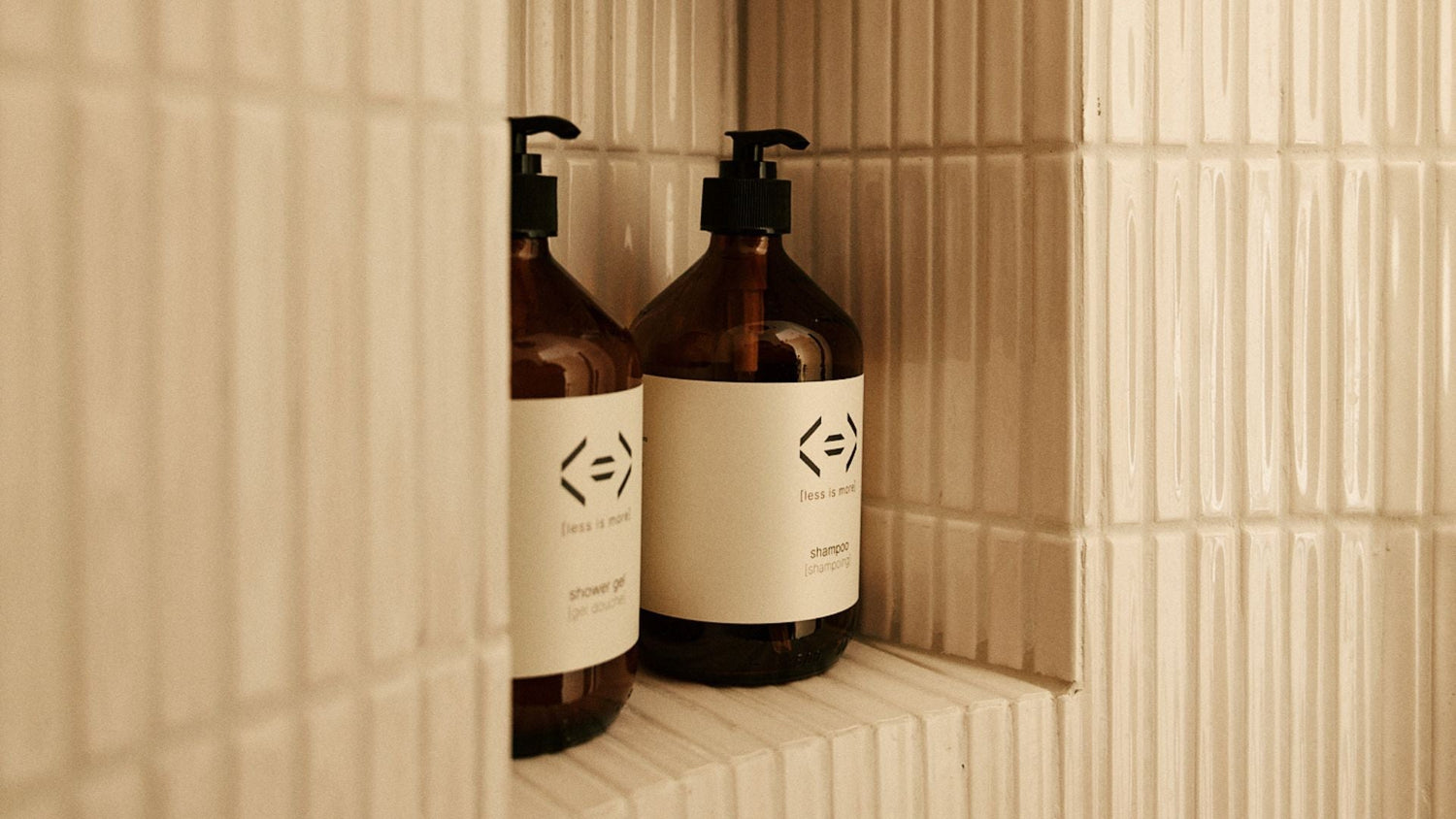
Those familiar mini shampoo and shower gel bottles in hotel bathrooms are living on borrowed time. Marriott alone estimates that moving away from them keeps roughly 500 million single-use plastic bottles — about 1.7 million pounds of plastic — out of landfills every year. IHG has cited a similar scale: roughly 200 million bathroom miniatures a year across its hotels before it began phasing them out. Multiply figures like that across the European hospitality sector, and the number of single-use bottles discarded annually — most after just one or two uses — runs into the billions.
This is no longer a voluntary sustainability initiative or a passing trend: the European Union has officially adopted the PPWR — Packaging and Packaging Waste Regulation (EU Regulation 2025/40) — which phases out single-use toiletries in hospitality starting in 2030. For hotels, serviced apartments, spas and hospitality venues of all kinds, this is a structural shift. But it's also a strategic opportunity — if you move before your competitors do.
What the PPWR Actually Requires from Hotels
The PPWR sets a clear direction: dramatically reduce packaging waste and accelerate the transition to reuse, refill and circular models across all sectors. The hospitality industry is explicitly targeted.
Under Article 25 and Annex V of the regulation, from 1 January 2030 economic operators may no longer place on the EU market single-use packaging for cosmetics, hygiene and toiletry products used in the accommodation sector when it is tied to an individual guest booking and meant to be discarded before the next guest arrives. In practice, this covers the individual single-use miniatures — shampoo, shower gel, body lotion, individually wrapped soap — that hotels hand out per stay, along with the sachets around bar soap. It is an outright ban on the format: not a percentage target, and with no room-count threshold.
One detail that’s easy to miss: unlike several of the other single-use restrictions in Annex V, which are explicitly limited to plastic packaging, the accommodation-sector restriction is written more broadly — it targets the single-use, per-booking format itself, not a specific material. Swapping a plastic mini-bottle for a single-use glass or cardboard one doesn’t sidestep the rule; the packaging needs to move to a genuinely reusable or refillable system to comply.
Not sure where your property stands on this? Request free samples and a compliance-ready proposal for your property →
The implications go well beyond packaging. Single-use toiletries represent high logistics costs, large storage footprints, significant carbon emissions from transportation, and a guest experience that has become increasingly generic. The PPWR turns what was once a pure cost-of-doing-business item into a regulatory, operational and brand question all at once.
Read the official regulation text: PPWR on EUR-Lex →
Why You Should Act Now, Not in 2029
The 2030 deadline may feel distant, but in hospitality development cycles, two or three years disappear quickly. The major hotel groups have already understood this. Marriott International eliminated plastic mini-bottles across its 7,000+ properties back in 2020, replacing them with larger-format refillable dispensers. Accor went further, removing single-use toiletry miniatures across all 39 of its brands — from budget properties like Ibis to luxury names like Fairmont and Raffles — as part of eliminating single-use plastics guest-wide by 2022. IHG committed its entire 843,000-room estate, across all 17 of its brands, to the same shift. None of these were purely environmental decisions — they were responses to shifting guest expectations and early positioning ahead of tightening regulation.
Independent and mid-scale properties that begin their transition now gain three distinct advantages. First, a smooth path to regulatory compliance without the cost and chaos of a last-minute overhaul. Second, a head start on guest expectations — business travellers, millennial and Gen Z guests, and the growing segment of eco-conscious leisure travellers are increasingly vocal about sustainable practices. Third, a genuine differentiator in their ESG narrative, which is becoming a deciding factor in MICE bids and corporate travel partnerships.
Waiting until 2029 is not just risky from a compliance standpoint — it means ceding that positioning to whoever moves first in your market.
The Alternatives to Hotel Miniatures: What's Available Today
Several credible alternatives have emerged in recent years, each with different trade-offs depending on your property type and positioning.
Solid toiletries — shampoo bars, solid conditioners, bar soap — were among the first to gain traction, driven by brands like Lush. They're appreciated for their simplicity and minimal packaging, but require some guest habituation and can raise hygiene questions in shared or high-turnover environments.
Wall-mounted refillable dispensers are today the most widely adopted solution among hotels that have already started transitioning. Easy for housekeeping teams, they cut packaging waste significantly. Their main limitation is that the guest experience depends entirely on the quality of the product inside — a standard bulk refill in a generic dispenser doesn't do much for your brand perception.
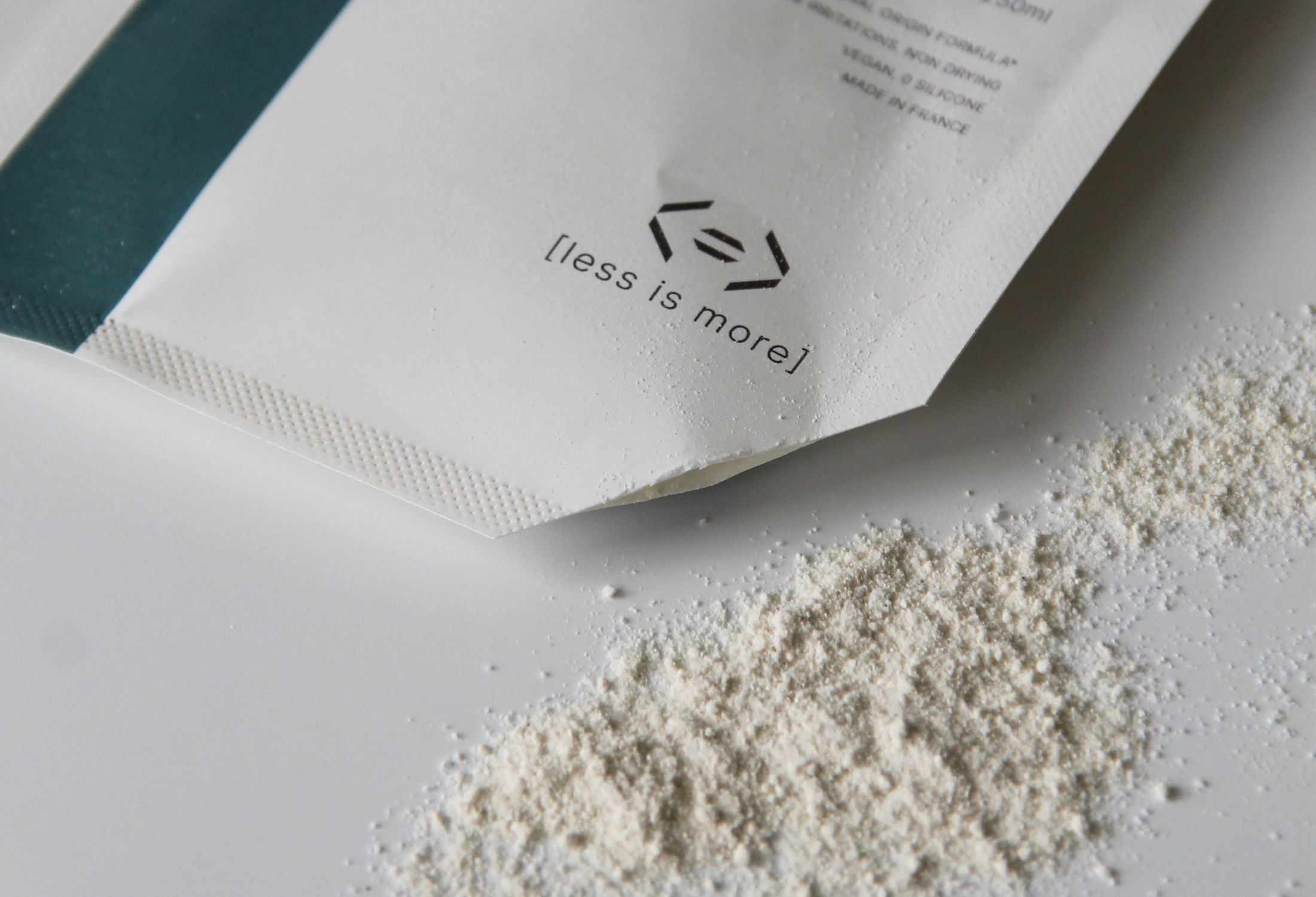
Powder-to-liquid cosmetics are the most recent and arguably most advanced development in this space. Rather than transporting and storing products that are 80–90% water, you activate a concentrated powder with water on-site. It's the model we've built Less is More around, and it warrants a closer look.
Why Powder-Format Toiletries Are a Game-Changer for Hotels
The conventional hotel toiletry model has a fundamental inefficiency baked in: a standard shampoo bottle is 80 to 90% water. You're paying to transport, store and ultimately throw away water in a plastic bottle.
Powder-concentrate formats turn this logic on its head. Activated with water directly on-site, they produce shampoos, shower gels and body care products on demand — no water transport, no excess plastic packaging, no bulky inventory. The operational gains are real: up to 90% reduction in storage volume, delivery frequencies cut by a factor of five or more, and formulations that are activated fresh, often delivering better stability and richer textures than standard hotel amenity products.
For housekeeping teams, the adoption curve is minimal — refilling a dispenser takes under 30 seconds. For your guests, the experience shifts register: signature fragrances developed with master perfumers, a sensory texture that feels deliberate and premium, and a sustainability story that actually holds up to scrutiny. In upscale and lifestyle hospitality, the definition of luxury is evolving. Tomorrow's premium experience won't be built around an accumulation of throwaway miniatures, but around products that are more intelligent, more desirable and more honest about their environmental impact.
How Less is More Works with Hotels
At Less is More, we've developed a full range of hotel guest amenity products in powder-to-liquid format — shampoos, shower gels, hand care — manufactured in France using natural, carefully sourced ingredients, free from silicones and harsh sulfates.
Our approach is built around three things. Sensory quality first: we work with master perfumers so that your bathroom amenities become a genuine part of the guest experience, not a forgettable commodity. Operational simplicity: our dispensers are straightforward to install and refill, and every order comes with clear usage protocols for your housekeeping team. Flexibility: no minimum order quantity, free samples to test before you commit, and a full customisation programme for properties that want to go further.
Make It Your Own: Full Customisation for Hotels
One of the most common requests we hear from hoteliers is this: "We love the concept, but can it feel like us?" The answer is yes — across every touchpoint.
Fragrance is the most immediate expression of your property's identity. We offer a curated range of signature scents developed with master perfumers, and for establishments that want something truly exclusive, we can work with you to develop a fragrance that belongs to your brand alone — one that guests associate specifically with a stay at your hotel.
Dispenser format and holder design can be selected to match your bathroom aesthetic. Whether your interiors call for a minimal matte finish, a warm natural material, or something more architectural, we offer different holder styles and can advise on the format that best suits your wall configuration and room category.
Custom labelling is available for properties that want their brand front and centre. Your logo, your identity, your name — on every bottle. This is particularly valued by boutique hotels, design hotels and luxury properties where every detail of the guest experience is intentional. It also reinforces brand recall: guests who loved their stay and remember the products are more likely to seek out your brand again.
For hotel groups managing multiple properties, we can also help you create a consistent amenity identity across sites while leaving room for each property to express its individual character.
The result is a bathroom amenity programme that doesn't just comply with the PPWR — it actively contributes to your brand story, your guest experience and your sustainability credentials all at once.
The PPWR doesn't just mark the end of hotel miniatures. It opens the door to a new generation of hospitality amenity products: more sustainable, more considered, and better aligned with what guests will expect in the years ahead.
Want to explore what a customised programme could look like for your property? Request your free samples and tell us about your needs →
FAQ — Hotel Toiletry Regulation
Are hotel miniatures really going to be banned?
Yes. Under the EU PPWR (Regulation 2025/40, Article 25 and Annex V), from 1 January 2030 single-use toiletry packaging tied to an individual guest booking — mini shampoos, shower gels, body lotions and the sachets around bar soap — can no longer be placed on the EU market. It is a straight ban on the format, with no room-count threshold and no percentage phase-in. Refillable and bulk systems are how you comply.
Which products are covered by the PPWR in hospitality?
The ban targets single-use packaging for cosmetics, hygiene and toiletry products provided per guest booking: mini shampoos, shower gels, body lotions, the small bottles and sachets around bar soap, and similar individual formats meant to be discarded before the next guest. Separately, the PPWR also restricts certain single-use food-service packaging in hotel F&B operations.
What are the best alternatives to hotel miniatures?
Four main solutions exist today: wall-mounted refillable dispensers (the most straightforward to deploy), solid toiletries (shampoo bars and solid soap, minimal packaging), refill systems with reusable bottles, and powder-to-liquid cosmetics activated with water — the most advanced option in terms of logistics reduction and sensory quality. The right choice depends on your property's positioning, size and the guest experience you want to deliver.
Why are powder-format cosmetics particularly well suited to hotels?
Because they combine advantages that other alternatives don't offer simultaneously: dramatic storage volume reduction (up to 90%), near-elimination of plastic waste, waterless formulations that are more stable and often more premium in texture, and significant scope for customisation. Day-to-day management is simple for staff, the guest experience is elevated, and the sustainability credentials are concrete and verifiable — not just a label on a bottle.
Does the ban apply to small and independent hotels?
The restriction is defined by how the packaging is used — single-use and tied to an individual booking — not by the number of rooms, so there is no room-count threshold in Annex V. The move away from single-use miniatures effectively applies across the accommodation sector, and guest expectations are shifting regardless of property size.
Where should a hotel start when preparing for the transition?
The most practical first step is to test alternative solutions before committing to a full changeover. At Less is More, we send free sample kits to any hospitality property that reaches out, along with a personalised proposal based on room count and current product usage. It's the most direct way to compare options and make an informed decision without any upfront obligation.
Read also: How to choose hotel amenities in 2026: a practical guide →
Beyond miniatures: the six amenity systems compared →





Leave a comment
This site is protected by hCaptcha and the hCaptcha Privacy Policy and Terms of Service apply.